
After one third of our travel, with a speed average of 6,6 knots, we reached the point of no return. At this point, sailing to the Cape Verde Islands would have been well possible. After this point, it is a one way route. The North East Trade Wind, that also helped Columbus - and about 1500 sailing yachts each year - to reach the Caribbean Islands, will push as westwards. So will the current and waves. Sailing back is not a valid option anymore.
All posts by earth

Day 6: Enough Wind?
Where is the wind? That’s the question Orinoco crew has when talking to the navigator. To answer it, we use satellite eMail weather advice from our dear friend Alex and satellite downloaded weather data from predictwind.com. At this moment, we hope to avoid the blue low wind area by not steering a direct course.
Day 5: Gourmet Cooks
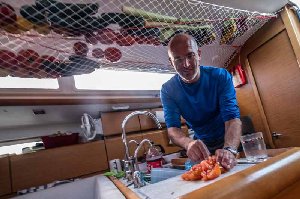
On Orinoco, the day starts with fresh food. Our gourmet cooks serve omelets with onion, pancakes with jam, self-baked bread and banana, apples, oranges and ananas for breakfast. Dinner is clearly dominated by forty frozen tuna steaks. Served as carpaccio or fried, combined with egg fruit (Aubergine), tomatoes, garlic or paprika, maybe with an additional salad and rice or potatoes or pasta. Eating, however, on a small boat in the middle of the Atlantic Ocean, with waves as high as four meter, remains a challenge. Knifes, forks and plates never want to stay on the table…

Day 4: Dolphins
They like it fast. When Orinoco races with seven or eight knots through the ocean water, dolphins cannot resist to play with our sailing yacht. Today, they followed us for half an hour.
Day 3: Low energy alarm
The capacity of our batteries has dropped to less than 45%. Why? More than 40 devices on board happily consume electricity (navigation system and lights, radar, fridge, two satellite communication systems, a lot of mobile phones and tablets, laptops, torches, water pumps and so on). The autopilot steering system, with its very strong electric motor, is our most energy hungry device (13 ampere). However, only three devices produce energy: wind generator, solar cells and motor. We did have enough wind today with 12 to 24 knots all day (nice sailing), but not so much sun (rain gusts). Therefore, we now try to use our hydrovane wind driven self-steering system as much as possible to save energy.

Day 2
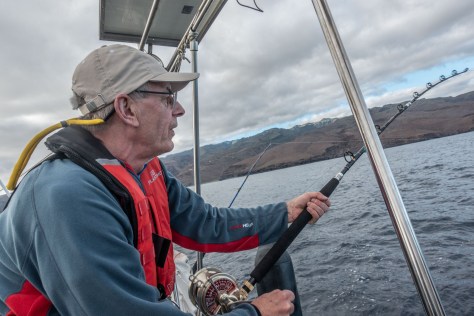
Before even having breakfast, both fishing lines gave alarm. After half an hour, the first 20 kg yellow fin tuna fish broke the fishing rod, but was caught nevertheless. We released the second one of equal size. Our refrigerator: full with fish. Bad luck for Frank and Uwe – they are not allowed to fish again for three days.

Day 1
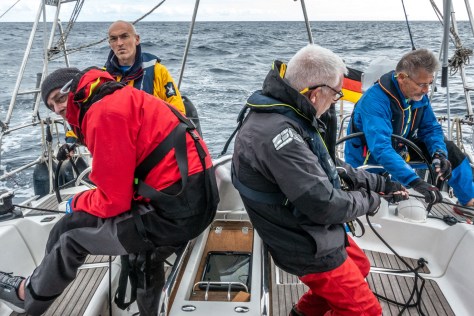
Der Törn beginnt. Ablegen aus der Marina Gomera. Zunächst guter Wind und einige Segelmanöver, dann Flaute:
Drei Fische vor der Küste Gomeras geangelt: Oceanic Puffer. Wie mir unser Freund Alfred mitteilte: potentiell giftig, letal. Zurück ins Meer…
Day 0
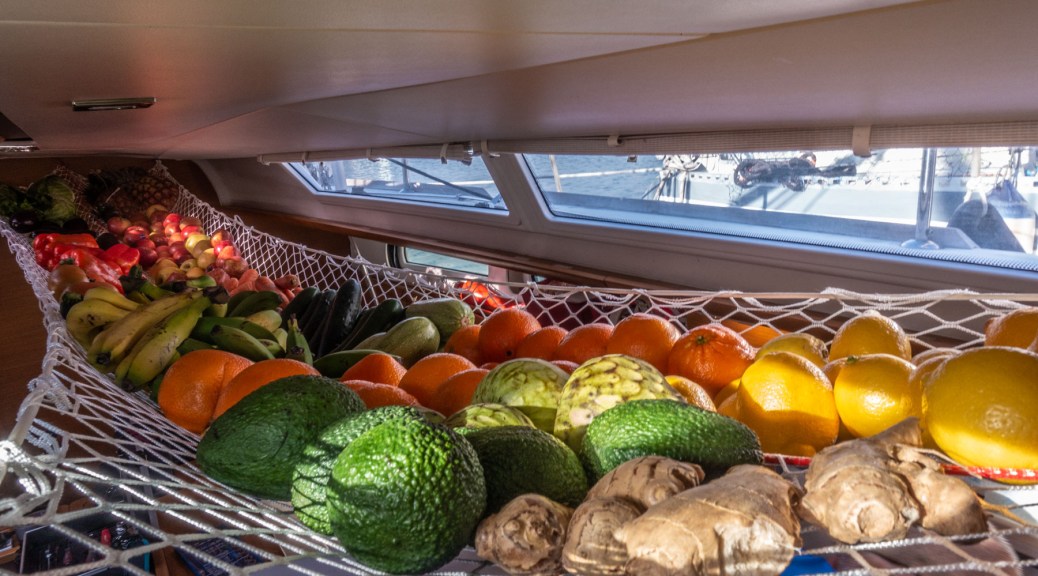
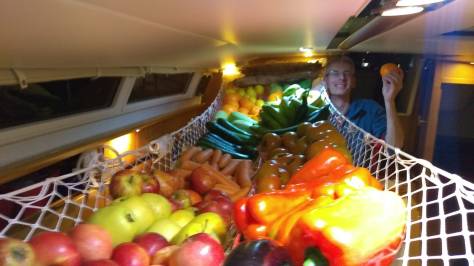
Der größte Einkauf ihres Lebens. Frank und Ivan kauften 300 Liter Wasser in Plastikflaschen und vieles mehr. Der Speiseplan der nächsten zwei bis drei Wochen wird vom Reifegrad des Gemüses und des Obstes diktiert.
Repairs before Atlantic Crossing
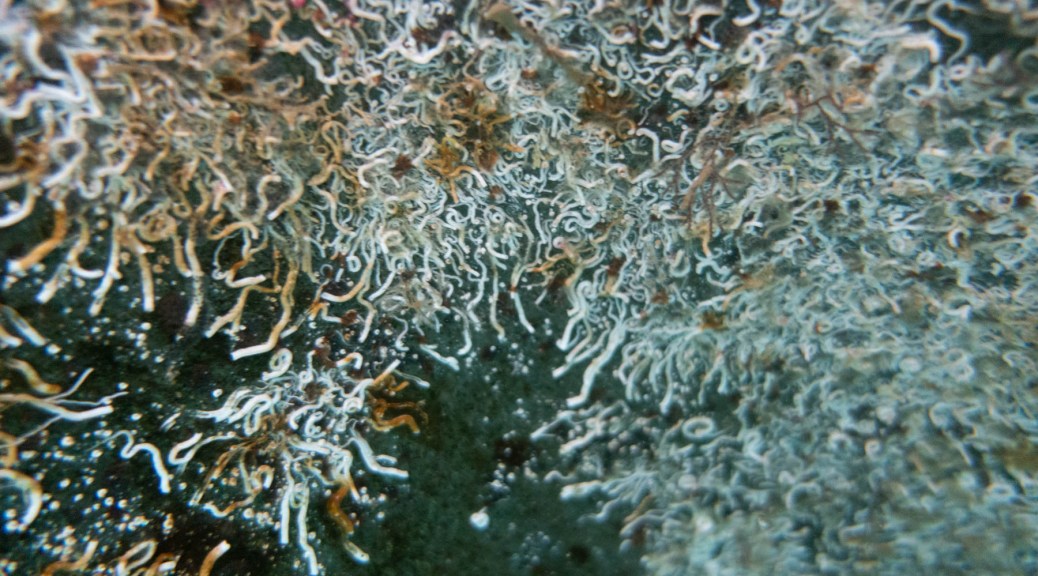
Anti-fouling paint is a special coating that is applied to the hull of a ship. The coating is used to slow down the growth of marine organisms such as barnacles, slime, algae and mossy weed. However, disappointingly, after three months in Puerto Calero, Lanzarote, our boat had to be taken out of the water and the hull had to be scrubbed.
More than that two days of work was needed to clean the hull, as shown on the right side of the picture. Our friends Frank, Ivan and Stefan helped Fred and me to do the job.


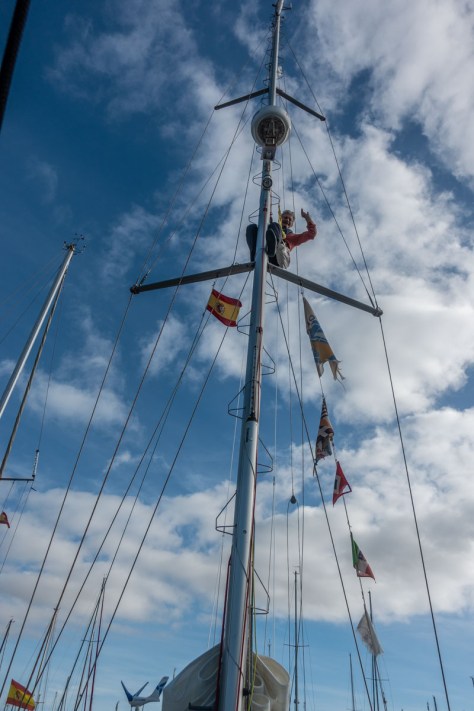
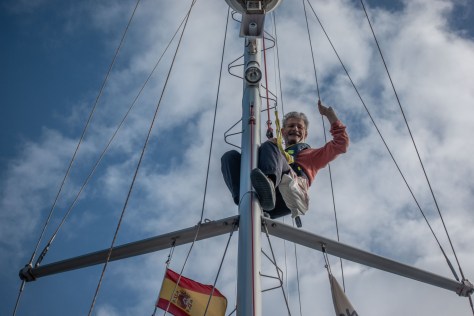
Additional, some sail and rigg improvements were done by Fred.
Our destination for 2020: ABC-Ilands
Aruba, Bonaire, Curacao: a German documentary about the islands.
 coconutmilk.de